The Middle Chamber

Meet at the Blue Lodge
Wed, 12/31/2008 - 11:01Recently, I have been informed that the Middle Chamber's articles are now being archived at The Blue Lodge Forums. The Blue Lodge is an excellent site that features a well maintained forum as well as feeds from several Masonic blogs. A link for The Blue Lodge has been added to the bottom of this page.
The forum features refreshing dialogue and a wide array of contributors. I have found that subjects are discussed with civility, even when the subject encourages opposing positions from the posters. The site is also easy to use and has a very attractive design which make reading and posting on the forums enjoyable.
The Blue Lodge is an excellent place for Masonic discussion and is a worthwhile trip for the eMason.
An Excercise in Determining Regularity
Mon, 12/29/2008 - 21:22A couple of weeks ago, The Chamber featured an article entitled Drawing My Own Line. This article had a dual purpose. First, I wanted to write an article which may lighten the mood surrounding the recognition issue which The Chamber had hammered pretty hard in the Interview With the Worshipful Master of Vulcan Lodge and My Reaction to the Vulcan Lodge Interview. Secondly, I also wanted to illustrate a point in the recognition and regularity debate.
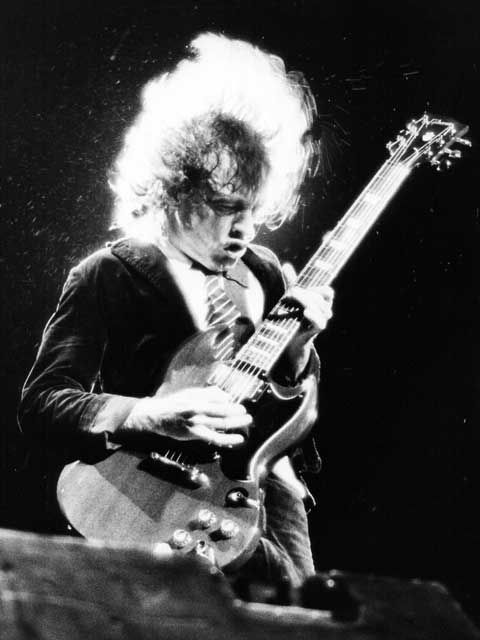
In my arguments, I had determined that AC/DC was the greatest band because I felt that they rocked harder than Led Zeppelin. Therefore, I painted AC/DC as the regular rock band by which all should subscribe to as being the best and only true rock band. On the other hand, I had argued that Led Zeppelin was not the pinnacle of rock and that they were irregular and should be regarded as a "clandestine" rock band.
My readers overwhelmingly voted for Led Zeppelin. Apparently, they felt that Led Zeppelin was the superior rock and roll band and did not feel that AC/DC was the Alpha and Omega of metal. Their opinion differed from mine and due to the terms laid down in the article, I could not recognize them as regular.
Now, how is this an exercise in determining Masonic regularity? Well, anyone who knows anything about rock and roll and doesn't listen to Michael Bolton or John Mayer knows that both bands are excellent, both bands will rock your socks off, and both bands are among the best selling bands of all time. Saying that you couldn't like AC/DC and Led Zeppelin, but had to choose between the two and shun the band that you didn't pick was simply absurd. Obviously there were plenty of folks who preferred both bands and both have their place in the rock and roll universe.
Frankly, this is the same issue that we face in Masonry. Both mainstream and alternative Grand Lodges have good things happening. They both offer self-improvement and both would probably appeal to most Masons if Masons were allowed to experience both. Saying that one is better than the other is both absurd and presumptuous. Much like the AC/DC and Led Zeppelin argument, you cannot simply listen to "Stairway to Heaven" and determine that Zeppelin doesn't play any rock and roll. However, if you tune in to the body of their work you may discover that they are a pretty good band, too. Maybe if all Masons were willing to "tune in" to unrecognized bodies like PHA, GOUSA, and independent lodges and look at all of their characteristics, they would find that they practice Masonry, too. Likewise, members of alternative bodies shouldn't defame the name of mainstream Masonry. It simply isn't fair to say, "I am looking for something else and that's okay," and then turn around and say "Your Masonry is worthless!"
It all comes down to tolerance. I can raise my fist for both AC/DC and Led Zeppelin, if my Zeppelin brothers raise a fist for my band, too.
The Miracle on 34th Street
Sun, 12/21/2008 - 10:10As the newly appointed Senior Steward, Brian was very anxious to properly execute his duties. He had been appointed by the Junior Warden as the head of the Good Will Committee for the Holidays. It was a wonderful little assembly, the focus of which was to find those Brothers and widows who were alone and perhaps afflicted with some ailment and provide them with a token of good will from the lodge.
The Junior Deacon had served as the head of the committee the previous year and presented Brian with a list of people which the lodge had visited or given some token of appreciation before. The list was noticeably worn and judging from the several different types of handwriting which performed the corrections on it, Brian assumed that it had been handed down from year to year. Being rather ambitious, Brian sought out the complete membership list and widow's register from the secretary to construct a new roster for the good will committee.
He discovered that the names on the good will roster accounted for every Brother and widow, except for one. A Brother by the name of Warren Phillips, who lived just a few blocks from the lodge, was absent from the good will list. Brian noticed that Warren's birth date indicated that he was nearing the age of eighty and asked the Secretary why he wasn't on the list and why he had never seen Warren in lodge. He was a widower, who had lost his wife about twenty-five years earlier. After his wife passed away he moved into a small apartment over on 34th Street, then shortly afterward, stopped coming to lodge. The Secretary explained that Warren had become quite upset with the lodge a number of years ago and had stopped attending. The lodge had heard he suffered a stroke, but never was able to make any contact with him.
Brian decided that he was brave enough to go visit Warren, so he purchased a small gift and set out to visit this unfamiliar Brother the next evening. Brian was a bit nervous, but he didn't think that anyone would be unappreciative about the gesture. He found the apartment building and walked up two flights of steps to the apartment listed as Warren's address on the lodge's roll. He knocked three times.
Brian waited for what seemed like an eternity and then, figuring no one was home, turned to leave when he heard the door open behind him.
"Can I help you?" said the elderly man standing in the doorway, gasping for breath. He was dressed in slacks and a cardigan sweater. His feet were covered by some well-worn moccasins and he had a tube feeding oxygen into his nostrils.
"Are you Warren Phillips?" Brian asked apprehensively.
"Well yes, but who wants to know?"
"Well, I am a member of your Masonic lodge and I am here to visit you and bring good tidings from the lodge," he pause, "it's so nice to meet you!" He extended his hand to shake Warren's hand, but the elderly man just stood there looking at Brian inquisitively. He was silent for a second, then spoke.
"From the lodge...hmmm...well I figured that they didn't care no more. Hell, I haven't attended lodge in almost twenty years and haven't spoken to any members during that time either. I appreciate what you're doing young man, but I just don't understand why they are reaching out to me now. I feel bad that you wasted your time and I appreciate the thought, but you can go on and enjoy the rest of your evening," Warren wheezed as he moved to shut the door.
"WAIT!" exclaimed Brian, "I brought you a little something, have a Happy Holiday season, Brother." Brian forced a smile, nodded his head, and then slowly walked away.
Warren studied the package, a rectangular box covering in blue wrapping paper with the square and compasses drawn on it, and then closed the door. Once inside, he opened it to find a box filled with various cheeses and cured meats and a box of crackers. He noticed that a card was taped to the upper corner of the box. He struggled to put on his reading glasses and read it. I appeared to be the name and phone number of the young man that had just visited him. On the bottom of the card was written:
Please call me if you ever need anything. Your Brother, Brian
January came and Brian had just gotten home from work. He was rushing to change out of his work clothes and put on his suit for lodge. He was running late and needed to be at the building to help serve dinner. Suddenly, the phone rang. Brian answered and heard the voice of an elderly man on the other end of the line.
"Hello, is this Brian?" the man wheezed.
"Yes it is."
"Are you the fellow from the lodge that came by to visit me during the Holidays?"
Brian was surprised to hear Warren had called him. "Why, yes! Is there anything I can do for you, Brother?"
"Well, it has been a long time since I've been at lodge and I suppose it is time for me to get my money's worth out of my dues. Would you mind giving me a ride to lodge? I don't have a car and I ain't fit to walk."
"Can I pick you up in a half hour for dinner?" asked Brian.
"Yup, that'll work." Warren abruptly hung up.
Brian was very pleased. It appeared that his committee had spread some good will after all.
Happy Holidays, my Brothers.
The Masonic Witch Hunt
Fri, 12/19/2008 - 12:15I once had a conversation with a Grand Master, during which the topic of membership was the main focus. We had discussed the declining numbers and active in his jurisdiction. So, I asked him what he felt was causing such a decline. When he responded, he blamed two categories of people: anti-Masons and discontented unrecognized Masons.
On other occasions, I have heard Masons blame society for our loss in membership. I have heard excuses such as, "These young kids just don't have the same values" or "People are too busy watching the TV" or "People are just too busy." Still, in other forums, I have heard Past Masters blame their successors or the lodges blame the Shrine or the Shrine blame the lodges. I have heard we don't recruit enough, I've heard that we shouldn't recruit at all.
What it all amounts to is a Masonic witch hunt. Everybody wants to place the blame for the declining numbers on someone else. We are upset that our numbers, and therefore our treasuries, are shrinking. We are upset that our assemblies are not large gatherings. We are upset that throngs of men aren't beating down our doors to enter our order. Surely, someone must be to blame for all this and they must be held accountable!
Or is anyone really to blame...
Oh sure, there are some...okay a lot...of problems that plague our fraternity. However, I really just think that we were unprepared to deal with the disappearance of the World War II generation from our lodges. Historically, the 1920's actually showed the greatest membership in Masonry. This was followed by a small decline and then a boom following World War II. Why? Americans felt closer. Men had went off and served with other men from all over the country, many of which were Masons. They joined in record numbers and imparted their own distinct flavor on Masonry, one that was quite different from their fathers' Masonry. But like a booming economy, everyone begins to panic when things go back to normal. Just because we are losing numbers doesn't mean that we are in a Masonic recession.
Masonry, just like other organizations, is going to shrink in size a bit. This generation just doesn't put as much stock in being a card carrying member of something. That doesn't mean Masonry is dying though. Our organization can become a smaller, closer fraternity that resembles the needs of the men now entering it. Just like the World War II generation changed the face of Masonry, this generation will now change the face of Masonry and there is nothing wrong with that. In fact, the best thing that elder and more experienced Masons can do is let the change occur. The sooner it does, the sooner Masonry will be appealing to the new generation.
Bob Dylan once sang, "The times they are a changin'." That is exactly what is happening in Masonry. It is not a decline nor a recession. And no, the younger generation or the guy that succeeded you in East is not to blame. Society changes and Masonry reflects that.
We don't need a witch hunt, we just need to come to terms with the changing face of the fraternity.
Drawing My Own Line
Wed, 12/17/2008 - 09:36Alright, I've had it. After all of the dialogue about these serious Masonic subjects over the past week, I HAVE TO DRAW THE LINE HERE. As a Mason, you are either an AC/DC or a Led Zeppelin fan. You can no longer be both and it from now on to be recognized you must be an AC/DC fan, the Zeppelin fans will be labeled clandestine.
Why? Simple, AC/DC has been rocking the world for nearly 40 years. Their hits included songs like Dirty Deeds Done Dirt Cheap, TNT, Whole Lotta Rosie, Highway to Hell, Back in Black, You Shook Me All Night Long, Money Talks, and For Those About to Rock We Salute You. All are prime examples of hard rockin', head bangin', and gear shiftin' rock n' roll. AC/DC doesn't get cheap hits by writing ballads that appeal to the masses. No, they are going to rock your freakin' socks off, whether you like it or not. What does Zeppelin provide? Stairway to Heaven. What a rip off, probably the lamest song of all time.
One only needs to examine the lyrics of their songs to see which one is the truly great rock n' roll band. Zeppelin's lyrics state "Its been a long time since I rock n' rolled." All I can say to that is: yes it has been Robert Plant. On the other hand, AC/DC's lyrics feature words like "For those about to rock, we salute you!" Which means, get ready, Angus and the boys and going to rock your world.
Another exhibit, what did Zeppelin do when John Bonham died? They quit! That's not very rock n' roll. When AC/DC's lead singer Bon Scott died, they didn't even think about quitting. Bon Scott had designated Brian Johnson as the man he wanted to take over as the singer for the band. So what did they do after their lead singer died following their best selling album Highway to Hell? The released a new album, Back in Black, with their new lead singer that just happens to be the greatest hard rock album of all time and outsold their previous album!
My last argument: Jimmy Page or Angus Young. Do I even need to give a rationale?
Look folks, there can't be any more middle men. Its AC/DC or Led Zeppelin, and the Led Zeppelin folks will be thrown into the pit. Vote in my poll on the right to show where you stand!
My Reaction to the Vulcan Lodge Interview
Mon, 12/15/2008 - 23:50A few days ago, I presented an interview with the Master of Vulcan Lodge, an independent lodge in Alabama which is not associated with the Grand Lodge of Alabama. Prior to the interview, I had heard good and bad things about the lodge. But like the Halcyon and Euclid lodge stories, I wanted to see what the members of the lodge had to say, not just read the speculation.
I once subscribed to the traditional thought that you can't have a lodge if it isn't a member of a regular and recognized Grand Lodge. But over time, I had a number of experiences which changed my view. Some of the Grand Lodges that I had come into contact with weren't exactly sources of great Masonic knowledge. Also, I learned that the United States is one of the few places with the idea of exclusive territorial jurisdiction. Always being a free bird myself, I started to wonder what constituted a regular Grand Lodge, why a regular Grand Lodge couldn't be recognized just because another body had already staked a claim in that region, and why we all couldn't just get along? I mean, were the Grand Orient of the USA or Prince Hall Grand Lodges really bothering mainstream Grand Lodges? I don't think so. Giving them mutual recognition probably wouldn't hurt anybody.
But the fact still remained that these different Masonic bodies had been vilified by regular Masons everywhere. It isn't very hard to find a site ran by recognized Masons which absolutely criminalizes unrecognized orders. I don't find it particularly becoming of a Mason myself. Live and let live, right? Oh sure, we've all seen some instances of Masons from alternative orders unloading on us mainstream Masons as well, but it is typically within the ebb and flow of the insults between groups. If us mainstreamers just left them alone, they probably wouldn't have to retaliate.
The interview with Jamie from Vulcan Lodge was a pleasure to conduct. He was polite and courteous and I look forward to staying in touch with him. The feedback from his lodge has also been polite, thanking me for the opportunity to share their point of view. While I made it clear that I had no intent of leaving my Grand Lodge to join their lodge, I also made it clear that I had no hostility towards them. I wanted to learn more about their lodge. I think that anyone who read the article can agree, it isn't a lodge full of crackpots practicing some weird occult Masonry. It appears to me that it is a group of men who had differences with their Grand Lodge, separated, and now are practicing Masonry on their own. In other parts of the world, they would probably already be recognized.
I am going to put it out there right now: I feel that it is a shame that anyone should have to be unrecognized by mainstream Grand Lodges just because they are seeking out the best venue to receive what they need from Masonry. Whether it is PHA, GOUSA, an independent lodge, or other orders, if they abide by the normal tenets of Masonry and seek self improvement, then I don't understand why we turn our backs on them. So what if some men find what they want in Vulcan Lodge? Some men probably find what they want in mainstream Grand Lodges in Alabama, too. They could co-exist without any issues.
Finally, I am not going to indict any Grand Lodges, but lodges seceding from Grand Lodges is starting to become routine. Is it time that we all started asking some questions? Perhaps mainstream Masonry could use a good look in the mirror to see if we really are practicing Masonry or if we are just kidding ourselves.
It gives me something to contemplate, anyway.
Ol' Leroy McKrank Visits Another Lodge
Sun, 12/14/2008 - 20:13Ol' Leroy McKrank wasn't one for vacations. They were unnecessary expenditures as far as he was concerned. But the persistent nagging of his wife finally convinced Leroy to do the unthinkable and take a vacation. So Leroy loaded up his meticuosly maintained 1970 Chevy pickup and drove Margrete thirty miles up the road to the Motel 6 in the city. Margrete wanted to go someplace classy and he wasn't going to fork out the money for the Ritz Carlton. He figured if he was going to take a vacation he might as well do something worth while. So he attended a lodge meeting that was taking place in the city that evening.
He entered the lodge in his normal visitor attire: a maroon colored three piece suit that he wore to his high school prom. It was quite a departure from his overalls that he wore to his home lodge meeting. Leroy was immediately appalled by what he saw. He saw expensive paintings, a full and well kept library, and a table full of refreshments. A Brother walked over to greet Leroy.
"Well, you fellas sure are a fancy bunch, just how d'ya afford this kinda place on 25 dollars a year?" Leroy was perplexed.
"Well, our dues are 150 a year, but my name is Brad, I'm serving as master of the lodge."
Brad was a young man, around the age of thirty. He was sporting a pinstriped suit and some of the most ornate Masonic regalia Leroy had ever seen. It appeared as though his apron had come right out of its packaging.
"Well, I suppose a man like you could afford it, eh sonny? You can just give me a good old fashioned white apron, one that has a little yellowing on it. That'll be fine," Leroy seemed displeased with all this excess.
Leroy sat through the lodge meeting which featured a speaker on the teachings of the Kabbalah, a lodge of instruction on the Emulation Ritual, and a report on the upcoming table lodge, which would feature fine wines and cigars. The lodge spent little time on business matters and discussed the points of the educational presentations. There were about twenty men in attendance, all under the age of sixty. All of them were dressed in some sort of dark suit. After lodge, they invited Leroy to accompany them to the restaurant downstairs and join them for a meal. Leroy obliged, out of morbid curiosity. Besides, the master said that he would pay for Leroy's meal. It wouldn't be very frugal to pass that up.
When they sat down to eat, Brad asked Leroy what he thought of their lodge. Leroy didn't hesitate to give his opinion.
"Well, son, I don't know what the heck you all were taught when you became Masons, but that is no way to run a lodge. You got too much stuff for starters! Who needs a library or attractive regalia! And I've never heard of a lodge meeting where people talked about the Kabbalah. Is that some sort of song by them Beatles? And just what the heck is the Emulation Ritual?! Our Grand Lodge gives us all the doggone ritual we need and I sure was upset by all that talk of intoxicating beverages for your table lodges. Boy, I'll tell you, you all need some learnin'! How can anyone afford all that!"
Brad answered patiently and politely. "Well, it is what the members want. We can afford all those nice things because one of our lodge members owns this restaurant and gives us a cheap rate for rent. Our Brethren listed Masonic education as their most important reason for Masonic involvement. It all comes down to what the Brothers want. They are willing to pay the extra dues, and most contribute extra sums of money, because they feel that the lodge is worth it. We are all really good friends and we all feel that the education makes us better men at the end of the evening."
"Well, I'll tell ya what ya need," replied Leroy, "ya need some minutes and real business to discuss. The Grand Lodge sends plenty of letters full of things your lodge needs to do. Then ya need to ignore all that hippie education! Do away with the books and paintings. Then afterwords, y'all can enjoy some weak coffee and hard cookies. I could get you down to 25 dollars a year dues. Now that is Masonry!"
"Well, I'm glad it works for your lodge, but that method almost killed ours." Brad replied, still shocked by what he was hearing.
"I'll tell ya what, when I get home tomorrow I'll call the Grand Master and get him over here to help ya out. Don't worry, ol' Leroy will get you squared away!" Leroy slapped his knee and cackled at his play on words. He found it quite witty.
He finished his dinner and put the extras in a to-go box. He figured that those leftovers would be the fancy vacation meal that Margrete had always wanted.
Interview With the Worshipful Master of Vulcan Lodge
Fri, 12/12/2008 - 16:34Normal 0 MicrosoftInternetExplorer4 /* Style Definitions */ table.MsoNormalTable {mso-style-name:"Table Normal"; mso-tstyle-rowband-size:0; mso-tstyle-colband-size:0; mso-style-noshow:yes; mso-style-parent:""; mso-padding-alt:0in 5.4pt 0in 5.4pt; mso-para-margin:0in; mso-para-margin-bottom:.0001pt; mso-pagination:widow-orphan; font-size:10.0pt; font-family:"Times New Roman";}
I read an article about a week ago on the Masonic Line entitled We Don’t Need No Masonic Civil War, which was about Palmetto Bug’s constant crusade against “clandestine” Masons. I googled the references that the article made and found out that they referred to the website of Vulcan Lodge in Birmingham, AL. Vulcan Lodge is an independent lodge in Birmingham which does not belong to the Grand Lodge of Alabama. After reading some of the information on their site, I began to develop a suspicion that there was more to this story that the Masonic Line could report. So I contacted the Lodge and their Worshipful Master, Jamie. Jamie eagerly agreed to an interview to get the real story behind Vulcan Lodge. This post will only show the interview with no commentary. I want the readers of this article to form their own opinions about the information presented here. I will present my views at a later time.
Silence: First off, was Vulcan lodge originally a lodge under the auspices of the Grand Lodge of Alabama?
Jamie: No.
Silence: How many of your lodge’s members were formerly members of the Grand Lodge of Alabama?
Jamie: There are only 2 of us, now, who were initiated, passed, and raised in the GL of AL.
Silence: Why did they separate and was racism an issue?
Jamie: Those of us who originally separated from the GL of AL in 2005 all had different reasons. Race was an issue, mistreatment was an issue, and for me…it was a moral issue. I felt like my lodge talked about a universal Brotherhood but then discriminated against anyone not of the same color, religion, orientation, etc.
Silence: So you were one of the original men who separated?
Jamie: I was the 3rd Master Mason who left the GL of AL to form the independent Lodge.
Silence: What led you to separate?
Jamie: I have several Black friends who are Masons. I saw this as an avenue to truly be able to openly embrace them as a Brother. I also considered it as the “right” thing to do.
Silence: What are your feelings towards other mainstream Grand Lodges?
Jamie: I believe the vast majority of mainstream Masons are very good men. I think, in time, the mainstream Lodges will progress and change.
Silence: So is Vulcan functioning as a normal lodge? Do you conduct business, degrees, have the regular offices, etc.?
Jamie: Yes. Vulcan has a business meeting the first Monday night of each month. We hold degree work as necessary. Normally we hold education or Brotherhood nights on the 2nd and 3rd Mondays.
Silence: What are the key differences between your lodge and mainstream lodges?
Jamie: Great question! 1st—Ritual…we use the Clermont Ritual from circa 1743. It is a great French Ritual. 2nd—We have different requirements for the number of Master Masons needed to open lodge. Only the top 3 officers need to be Master Masons. We do this because our candidates progress much slower from EA to FC to MM. This process typically takes more than a year. 3rd—We have a working relationship with a Prince Hall affiliated Lodge in Birmingham. We allow intervisitation. 4th—We have adopted the Chamber of Reflection that is used in much of Europe. I know of no mainstream lodges in the US that have adopted this custom.
Silence: Without getting esoteric, where did you derive the ritual which your lodge uses from?
Jamie: A brother in Europe sent me the ritual that we use. It is the Clermont Ritual circa 1743. It VERY strongly resembles early SR ritual.
Silence: Do you ever desire to return to the Grand Lodge of Alabama?
Jamie: No
Silence: What are your feelings about Masonry?
Jamie: Masonry is a place for seekers and free-thinkers. It is a place for those who are interested in enlightening their minds.
Silence: How many men have you brought into Vulcan lodge (through degrees) since the separation?
Jamie: We have brought 7 new members in within the last 18 months (approx). Only one of them have achieved the title of Master Mason.
Silence: How many men have left the Grand Lodge of Alabama for Vulcan lodge since the separation?
Jamie: None! Originally the MM’s who left the GL of AL to form an independent lodge had the intentions of the new lodge joining the United Grand Lodge of America. After much consideration we decided to remain independent, dissolved the Lodge in order to achieve a clean break from the UGLA, and formed Vulcan Lodge. Since that date we have gained no members from the GL of AL.
Silence: How do your younger members feel about the fact that they are not allowed to visit other lodges and are not recognized by mainstream Grand Lodges?
Jamie: They find more pride in taking the moral high ground that Vulcan Lodge assumes than in their desire to visit mainstream Lodges.
Silence: If you could go back in time, would you still separate?
Jamie: Yes.
Silence: What do you want out of Masonry?
Jamie: Free-Masonry is a never ending journey. I want to continue to grow and improve myself in Masonry.
Silence: How do you think the fraternity could be improved?
Jamie: Mainstream Masonry, especially that in the Southern US, needs to become more tolerant. When the internet was still new everyone used AOL, myself included. I used aol chatrooms, aol news, aol search, etc. I really didn’t know about the World Wide Web until I stopped using AOL. This, somewhat, describes the state of mainstream Masons today. If they ever step outside of the box they may find that there is far more to Free-Masonry than what they have been exposed to.
Silence: Do you feel hostile towards Masons who belong to a Grand Lodge?
Jamie: Not at all.
Silence: Do you regard members of mainstream Grand Lodges as Brothers?
Jamie: Absolutely.
Silence: I see on your blog that you mention something about a Masonic Civil War. What did you mean by that statement?
Jamie: Our blog master feels that the recognition issue will lead to conflicts between mainstream Grand Lodges. One example is the Brother who was a member of the GL of NY and the GL of KY (I think it is KY). NY recognizes Prince Hall and KY doesn’t. He visited a Prince Hall Lodge and KY is now working to expel him and that, of course, risks his NY membership. Another example is the current disputed between the GL of NY and the GL of Washington DC over a lodge that DC chartered in Lebanon.
Silence: If a Grand Lodge one day extends there hand in friendship to your lodge and offers mutual recognition, would you accept?
Jamie: Yes, we probably would
Silence: If a lodge separated from their Grand Lodge and asked for mutual recognition, would you accept?
Jamie: Yes…unless there was a reason to suspect they separated for illegal or other bad purposes.
Silence: Do you have anything else you would like to say to the readers of this interview?
Jamie: I have a lot of friends who are members of the Grand Lodge of Alabama. I’m a 4th generation Mason myself. I am a Past Master of my old Lodge in the GL of AL. Vulcan Lodge didn’t form to throw stones at Mainstream Masons. I do understand that this has been done by both sides. But we work hard to discourage our members from doing this. Even when we are attacked it is better to take the high ground and not stoop to the attacker’s level. We believe in a more literal interpretation of Masonic teachings. The universal Brotherhood of Man means just that. All Masons, regardless of race, religion, etc should be accepted as Brothers. When are taught the method to recognize a man as a Mason the ritual doesn’t mention the propriety of his dues card or the color of his skin as a mode of recognition. Every time a blog or website attacks us it drives people to our blog to see who we are. The last two members to join our lodge found us by reading attacks on us. Neither wanted to join the GL of AL due to it’s position on Prince Hall Masons. The diversity of our lodge impresses those who are familiar with the makeup of the Grand Lodge of AL. We have Catholics, a Jew, a Muslim, a Jewish leaning member, a Russian Orthodox leaning member, Christians, and a member who was a licensed Baptist minister. We have a member who is gay. You would be very hard pressed to find this kind of diversity in a typical GL of AL lodge. I think that all Masons….regardless of jurisdiction should be able to be friends and just not discuss the issues that divide us. The level and nature of the attacks on us is just crazy. Over the summer I had a nice phone conversation with Palmettobug. Though he and I had respectful disagreements he made no accusations of scams or lies at that time. Personally…I think most of the attack dogs should just get a hobby! They’d find it much more rewarding.
I would also like to point out that the words clandestine, unrecognized, and irregular all have different meanings. In today’s society most Masons believe they all mean the same thing. They should research these terms and read about the context that they were originally used.
Celebrating One Year
Sun, 12/07/2008 - 22:49On December 6, 2007 the Middle Chamber featured its first post, just one year ago. I will say that I could never have expected the number of readers or amount of feedback I have received. In celebration of my first year, I would like to recap by providing links to my Top 10 articles. These are being chosen based on the amount of response they received, the ranking they received on King Solomon's Lodge, and my personal opinion. I hope you enjoy them, whether it is the first time you have read them or you are revisiting them again.
The Middle Chamber's Top 10
10. Ol' Leroy McKrank
9. Music: The 6th Liberal Art
8. Lodge by Candlelight
7. Time to End the Recognition Issue
6. The Late Brother Abi's Disenchantment With American Freemasonry
5. Waiting for the Master
4. McCarthyism in Freemasonry
3. In Like Destitute Circumstances
2. The Book Upon the Altar
1. National Masonic Constitution
Which is your favorite?
Guest Article: A New Way Forward by Nick Johnson
Sat, 12/06/2008 - 10:07Normal 0 MicrosoftInternetExplorer4 /* Style Definitions */ table.MsoNormalTable {mso-style-name:"Table Normal"; mso-tstyle-rowband-size:0; mso-tstyle-colband-size:0; mso-style-noshow:yes; mso-style-parent:""; mso-padding-alt:0in 5.4pt 0in 5.4pt; mso-para-margin:0in; mso-para-margin-bottom:.0001pt; mso-pagination:widow-orphan; font-size:10.0pt; font-family:"Times New Roman";}
This next article on our series on Masonry's sustainability is from Nick Johnson over at the Millenial Freemason. Brother Johnson brings up several good ideas on the reception of new Brothers, the changing face of our society, and the use of technology in the lodge. I know that I got some ideas from this article.
Silence Dogood was kind enough to ask for my take on the issue of sustainability within Freemasonry and I would like to thank him for the invitation. We continually hear that there is a problem with membership, whether it be declining numbers, lack of participation, or a societal apathy for social clubs. What is missing in this mournful cry is the possibility for greatness that the Fraternity still possesses. Lodges and Grand Lodges can focus on three major themes I think can be focused on to maintain and hopefully grow the Fraternity, by managing expectations, knowing the demographics and understanding technology.
When a new candidate has petitioned the Lodge, we have a very short window (a minimum of three meetings) to understand the new brother's expectations for us and instill in him our expectations. When a brother enters the Lodge, he needs to be informed that the Lodge is many things to many brothers. Some brothers want the fraternal aspect, some want to be charitable and some seek the philosophical aspects of the Lodge. It is essential that we inform the new brother that if he wants to participate in one of these aspects of the Fraternity, he needs to ask. Lodges should be participating in these different aspects but it will not be in the quantities that each brother would like. We need to understand why a brother seeks to join to fit Freemasonry to his needs.
We, as Lodges, must also have certain expectations of our new brothers. We should require proficiency exams, brothers should take part in the ritual, and brothers should come to as many meetings as possible. New brothers should be asked to participate in discussion groups and Lodge committees. Only by inviting new brothers to participate can we expect a new growth in interest.
Lodges must also be aware of the changing demographics in their communities. In Minnesota, the community is changing rapidly. In the last few decades, we have had an influx of Hmong, Somali and Latin and South American immigrants. What are we doing to invite these potential brothers into the Fraternity? Lodges need to develop an outreach program for these communities. Freemasonry does not have a test on race, national origin or religion. Although these men have different beliefs and traditions, the universality of brothers working together for the common weal is the essence of Freemasonry. Freemasonry was once a symbol that new immigrants had been fully accepted into the community. We can again be that symbol if we meet with these new immigrant groups.
The third important task that Lodges and Grand Lodges must take upon themselves is understanding technology. For years, Freemasonry has been nearly hidden from view on the Web.
Many of our Lodges and Grand Lodges have now just figured how to put together a website. We are missing an entire generation of men because we are not speaking their language. Why is Ohio the only Grand Lodge with a podcast? Why is Facebook not being used to create meetups among brothers in an area? With services such as Facebook, Twitter, and podcasting, we could be getting our message out there, which in turn, would give our Fraternity some relevance. We can do more of this at little to no cost to us. Hopefully, in the near future, Freemasonry will learn these trends in technology and marry them into the Fraternity.
Of course, this list is not exhaustive. However, these three goals are more easily attainable and will make Freemasonry for years to come. I can only hope that we will implement these small goals and see where the Fraternity will go. Only then can we sustain ourselves into the future.
A Culture Change
Tue, 12/02/2008 - 11:41A couple of weeks ago, The Chamber featured an article by Squire Bentley entitled "What Really Makes a Successful Lodge." This article was quite interesting to me, because Brother Squire had used many of the same techniques to reinvigorate his lodge as I have. The article concludes that the true path to a successful lodge is to plant the core of Masonry, education in moral certitudes, at the center of the lodge and make those lessons the major focus of the lodge. I couldn't agree more, I had long believed this to be true. However, as I examined the effort to improve my own lodge, I couldn't help but see a pattern developing.
I have been a part of putting on a number of lodge events. These have included dinners, degrees, informational meetings on what Masonry is, etc. I have always been a firm believer in putting on a classy affair. So, when putting on these events I am very detail oriented. I am concerned about the decoration and presentation of the meal. I insure that degree parts are well rehearsed. I make sure that people are arranged in such a manner that all persons in attendance will be involved in conversation and not "left out in the cold." After these events, I always hear about how excellent it was, how it is such a departure from the ordinary, and how proud our lodge is of our accomplishment. However, when the next stated meeting rolls around, we still struggle to fill our chairs and open the lodge. The meetings are dull and Brethren begin to look at the clock, anxious to get back home and watch the football game.
Squire Bentley correctly notes that Masonic education needs to be the main focus of a lodge, but I have always put some sort of personal improvement and Masonic education at the forefront of these events. So why is their effect only temporary?
I believe that many lodges may require a culture change. You see, most people appreciate a good lodge function or are touched by a Masonic lesson. That is true in even the most mundane of lodges. However, enjoying the lessons of Masonry and understanding their worth is quite different from thirsting for the knowledge of the fraternity. There is an old saying "You can lead a horse to water, but you can't make him drink it." This can be particularly true in Masonry. So, if you can't make the horses you have take a drink, why don't you find new ones that will?
What does that mean? I believe that making self improvement and moral education the main focus of the lodge begins with the mentoring of our petitioners. What kind of steps are we taking to make sure we get thirsty horses? I have seen a lot of Brethren enter the fraternity. They are typically in one of two categories: those looking for self improvement and those looking to be a part of an organization. Now, both of these categories have their place in Masonry. However, it seems as though the few new Brothers who actually stick around are from the latter category. I believe that it is a result of Masonry being an organization rather than a school for self improvement. Many of the young Brothers in the former category that I have had the pleasure of knowing became bored with Masonry. They were looking for an education and we offered them a business meeting. Had we offered them an education and demanded a certain level of understanding in order for them to advance in the fraternity, they may have remained among our active members.
Not everyone in Masonry has to be an esoteric junkie. I don't see why our currently active Brothers who find that charitable pursuits or fellowship are the most redeeming qualities of the fraternity can't continue to feel that way. However, the future of our organization demands that we foster spiritual growth in the hearts of our initiates seeking knowledge and who desire to better themselves. If we can offer the services they desire, they will become the core members of our lodges in the future and bring a zeal for Masonry that many lodges need.
If we can nurture quality individuals and create interested and enthusiastic Masons out of them, Masonry can sustain itself. This is what will provide the culture change which can create successful lodges. It might not happen over night, but Rome wasn't built in a day either.
Guest Article on Masonry's Sustainability by the Masonic Traveler
Wed, 11/26/2008 - 18:44Normal 0 MicrosoftInternetExplorer4 /* Style Definitions */ table.MsoNormalTable {mso-style-name:"Table Normal"; mso-tstyle-rowband-size:0; mso-tstyle-colband-size:0; mso-style-noshow:yes; mso-style-parent:""; mso-padding-alt:0in 5.4pt 0in 5.4pt; mso-para-margin:0in; mso-para-margin-bottom:.0001pt; mso-pagination:widow-orphan; font-size:10.0pt; font-family:"Times New Roman";}
The next article in this series comes from the Masonic Traveler who writes on his blog entitled the Masonic Traveler. This Brother was one of the first bloggers that I became familiar with when I started my journey through the series of Masonic web logs out there. I have always been impressed by his insight and feel honored to have him write this article for the Chamber.
I was asked by Silence Dogood for my contribution of a paper on the sustainability of the thing we look at as Freemasonry today. In approaching that paper, it raised some questions in me that challenged how I looked at things in the past. I do believe that we can preserve the present nature of the fraternity, but to truly understand what that means we need first to define what purpose of the organization is. Yes, the fraternity is in a decline in numbers, but in an upswing of interest. Where the two meet is still in the either, but at some point they will which will be the point in which things will improve. BUT, that requires our active participation to improve it.
Masonic numbers speak for themselves, of that there is no doubt. In early 2007 I needed to chart and graph for myself what is taking place to establish a clearer picture of what was, what is, and what could be. That exploration ended in the paper “So What” and it concluded that the fraternity was in a 20% declination per decade since 1959, where membership has dropped by over 3 million members. Since that article however, some of my opinions have changed as to what they mean and my conclusions that could be drawn from them. To reach these new conclusions, I needed to look more deeply on where we have come from to try and formulate a view on where we are going.
We can improve Masonry by taking an interest in it. We can participate in lodge, be Freemasons in public, and represent the lodge in the community and in your business. Further, we need to become versed on what it means to be a Freemason by personally exploring the statement “making good men better”, and not rely on what others have said of it. Answer for yourself how Masonry makes good men better and that will give you the answer when someone asks.
The first thing we can change is how we perceive the fraternity. If we see it as a failing relic of a bygone age then others will see that too. If you see it as an inept organization with little purpose, then others will read that in you. The first thing to change is how we see the Fraternity. The energy spent to think negatively is the same spent to think positively, so first to change is how we choose to see it. The next thing we can change is the role that it holds in our life. Be active in lodge, participate and voice your opinion. That is the point of communal life, to be a part of it. Change does not happen over night, and the more radical the deviation from what has been the norm the longer it will take and the more friction it will produce. That is the nature of change and it takes time.
To keep our doors open we need to re-engage our communities and let them know that we are there. Civic participation, open houses, community events, religious participation, or interest group affiliations, we need to take part in the community if we expect the community to take part or be interested in our community.
At present, I believe that the fraternity is nearing a plateau, not in membership numbers but in interest. In the past there have been many who have written countless books on Freemasonry on subjects from leadership to the depths of the esoteric, but never did it seem that that they explored greatly the idea of transitioning the knowledge being imparted into a universal “Masonic” movement. Outside leadership (or influence) was kept at arms length under the mantra “No one speaks for Masonry” which has failed in many ways to give the fraternity a clear voice. What we see today are many voices speaking about the fraternity from published works that encompass the totality of the fraternity (Dummies and Idiots) to websites and blogs with impassioned voices about their Masonic experience. In the past, this would have been unprecedented for so many public voices having so much to say without regulation. Essentially, it has become a genie that has been let out its bottle, and this is a good thing as it shows the diversity and universality of thought.
Future trends are not a good tool to steer the fraternity on. There needs to be a focus on the here and now. We do need to make some inroads on our education, but at the same time promote more exploration to our history and what it means to each individual brother. The blandness that is Freemasonry is also its richest asset in that it inculcates all men of any belief, and that, I believe, could use some further exploring. This would entail a greater push away from the “myths” of Masonry and more connectivity towards why the myths were created and what they mean.
My final realization is that never has there been a status quo. At no point has there been a period of absolute stability. There have been periods of both growth and decline which have in turn expanded and contracted the overall reach of the organization. In those periods, temples have opened and closed as the need has befit it. At its worst, the Morgan Affair in the 1800’s nearly wiped out Freemasonry with the Anti Masonic Party and the wide spread evangelical outcry of affiliation with the fraternity. Lodges across the country were lost and Grand Lodges failed to meet with required member numbers. Freemasonry came back from the brink of its demise because of the same passions what we see in play today. With that recent history in mind, lets then look at how to move forward from the period in the here and now.
As we come to that plateau, it raises the question of what next? Before we can answer that question, I think it needs to be said that with so much energy and interest in a space only a few short years ago devoid of ANY such interest group is testament to its future. The question is how to transition from interest into harnessed energy to power the organization. Too often we look at the Grand Lodge as the unscrupulous wielders of totalitarian power, when in fact they are but an organizational figurehead. We need to focus less on their authority and more on what our individual capability is. We need to ask ourselves individually how we can make change happen. We become the next step in doing something differently in the future.
Our preservation should not be our concern, but rather our communication to others the knowledge of the degrees. Freemasonry will always exist in one way shape or form in some place or another. The question is will it always exist in the same places and in the same way as it does now, and the answer is no, just as there was a time when it did not exist there in the first place. Lodges and practices are transient, and it is the tradition that we need to focus on rather than to keep the building and ephemera intact as a reminder of its lineage. The lineage is in the lessons communicated down from age to age.
Masonry itself will endure regardless of our actions. What we can effect is that memory and idea of the fraternity but not regulate its being. In the past Masonry was known by its conferral of the degrees, which is how it will be known in the future. That is the essence of Freemasonry to make Freemasons. What shape it will hold is as vague as the shape it would seem to have today to a brother from 100 years ago. It would do us well to reinterpret how we see Freemasonry to better understand how to govern it.
Guest Article: Sustaining Freemasonry by the Palmetto Bug
Mon, 11/24/2008 - 20:58This second piece in the series on Masonry's sustainability comes from the Palmetto Bug over at The Masonic Line. The Palmetto Bug is a man whom I have long admired for his dedication to Masonry and his well-worded opinions which often differ from mine. Nevertheless, he is a gentleman and a man I am proud to call Brother. I think that this article makes a point that many of us need to keep in mind.
At the invitation of Silence Dogood, of the Middle Chamber blog, I offer this short piece concerning his chosen topic of Masonry’s sustainability.
Freemasonry sustains herself. She always finds ways to survive during the toughest of times. She has survived the crushing and brutal heels of fascism and communism. She has survived the self-promoting Anti-Masonic party in the United States. She continues to survive well amongst the current ongoing anti-masonry movements, the efforts of supposed religious leaders, and even the falsifications of quasi-masonry. Freemasonry is a survivor – tried and true.
There is – admittedly – a certain group of Freemasons that seem to think the sky is falling. Most of their fears revolve around the shrinking membership numbers. Freemasonry does – as does almost everything in society – run in cycles. There are ups and downs and a downswing in the number of members should not be interpreted as the end of Freemasonry. It is just a cycle and many of the numbers are suggesting that the downswing is slowing and is about level out.
Freemasonry probably was never meant to be for the masses, therefore relatively low membership numbers are not necessarily a bad thing. General society is not – and may never be – ready for Freemasonic principles. In other words, Freemasonry is not for everyone and the seeking of higher and higher membership numbers probably should not be a goal.
Freemasonry is sustaining itself and will continue to do so. She is a tough old bird. Though there can be some tweaking here and there, the Freemasonic system is rather viable as it exists today – as long as nobody tries to tweak it too much.
Guest Article: What Really Makes a Successful Lodge by Squire Bentley
Fri, 11/21/2008 - 11:32I have asked a few fellow bloggers to contribute an article to The Chamber expounding on the idea of Masonic sustainability. I wanted to develop a cross section of ideas on how or if we can preserve Masonry for future generations. While I only explicitly asked a few bloggers to contribute, I will not turn any article from any of my readers away on this subject.
The first article comes from my good friend Squire Bentley from over at the Beehive. Squire's article is one that I am going to keep in my personal files for the day that I might visit the chair in the East.
Normal 0 MicrosoftInternetExplorer4 st1\:*{behavior:url(#ieooui) } /* Style Definitions */ table.MsoNormalTable {mso-style-name:"Table Normal"; mso-tstyle-rowband-size:0; mso-tstyle-colband-size:0; mso-style-noshow:yes; mso-style-parent:""; mso-padding-alt:0in 5.4pt 0in 5.4pt; mso-para-margin:0in; mso-para-margin-bottom:.0001pt; mso-pagination:widow-orphan; font-size:10.0pt; font-family:"Times New Roman";}
For years I have been studying how to make a successful, vibrant, growing Lodge and trying my best to implement it. This subject has interested me ever since I served as Worshipful Master at Plymouth Lodge, Plymouth, Massachusetts in one Masonic District in 1994 and then again in another Masonic District at Paul Revere Lodge, Brockton, Massachusetts in 1999 & 2000. These Lodges were very high profile and very successful at one time. But the membership numbers, attendance, and the ability to fill an officer’s line had become critically deficient. So as I assumed the East at both these Lodges I spent a good deal of time not only researching and reading what other Lodges across the nation were doing to try to boost interest, but I also experimented with a number of ideas to try to recharge these Lodges.
I borrowed many ideas, thought up some on my own, tried and failed and tried and failed again. My affiliation with Paul Revere Lodge was with a Lodge of considerable means with Lodge money available to spend on the Brethren and my affiliation was deliberate to have the means available in order to execute programs that would make the Lodge grow. After two attempts to work some magic in the East I was no closer to finding the formula for a successful Lodge than when I started. What really moved the learning curve along was my personal move from the Northeast to the South. And what became even more enlightening was my transfer from Southern mainstream AF & AM into Prince Hall Masonry.
Armed with this experience I have classified the different styles of rejuvenation into FIVE categories or Lodge Models.
1) AMENITIES ORIENTATED
Model One says that what is lacking in Freemasonry is some comforts of life. It says that Freemasonry has become miserly, its Lodges bare bones and its practices devoid of celebration. All that is needed, this model exhorts, are some really great meals and some social functions such as Ladies Nights, Christmas Parties and summer barbeques, all subsidized by the Lodge. In addition the 50s furniture and the old style carpet need to be replaced with 21st century furnishings. Add a pool table, a wide screen TV, high-speed computers and piped in stereo sound and you have the makings of a Lodge that will attract men to relax and enjoy fellowship and brotherhood. Along these lines the Lodge should have a part time bar if allowed and if not occasional after meeting fraternalism at a local Pub is in order. Run your Lodge like an English Gentlemen’s club with some modern updates and acquiescence to youth and watch attendance grow, this model touts.
This type of approach is one, which I early on embraced wholeheartedly. My first time around at Plymouth Lodge I started an annual surf and turf night- boiled lobster and steak off the grill cooked on the premises. At Paul Revere Lodge, I put on catered meals every meeting that were outstanding, like steamship beef.
We also ran Christmas parties, Ladies nights and a summer barbeque at both Lodges. Both Lodges were repainted and recarpeted. In addition at Paul Revere where the budget was very generous I was able to add some special programs. One was a Masonic Roast Dean Martin style for a beloved Past Master, another was a special dinner held at a restaurant for the secretary of the Lodge and yet another was a breakfast for a Past Master in charge of the hospital visitation program. There were many other perks and celebrations too numerous to mention all here.
I had high hopes with all these amenities, held in many cases on a grand scale, that enough enthusiasm would be generated and that word of mouth would get around that Freemasonry had something to offer men searching for camaraderie. Surely the Brethren would turn out in greater numbers and the Lodge would grow with new members if we pampered our membership. Sadly there really was no noticeable difference in the attendance and growth of the Lodges even with all these benefits. This model was a dismal failure.
2) EVENT ORIENTATED
Model Two says that Blue Lodge is boring and it says that it is boring because if all you are doing is business meetings you are not really practicing Masonry or doing anything different from what many other organizations do. And this is precisely the reason that many Brothers flee the Blue Lodge for the more inspiring confines of the York Rite or Scottish Rite. Put some programs together, says this model, that help express Freemasonry and/or that celebrate the Craft. It is no wonder that Blue Lodge attendance is so low seeing as how all it does is a one-hour business meeting followed by stale donuts and coffee and then all the Brethren go home.
This too was a model I endorsed. Good programs add purpose and meaning to Lodge life, I reasoned, and surely will draw many Brethren to active participation in their Lodge. So at Plymouth Lodge we did a Lodge visitation to another Lodge 40 miles away and they returned the visit. We participated in the traveling gavel program. I had a DeMolay Chapter come in and do a degree. And we had the Paul Revere Colonial Degree Team degree team come and perform the third degree in colonial costume. This Lodge also held a very good and well attended Table Lodge which I held in special honor to a very hard working member of the Lodge. When my Secretary announced his retirement I had a dinner in his honor at the Lodge and invited all the Secretaries in the District to come help me honor him. We also did the usual Past Masters night where all the Past Masters assumed officer stations and performed a degree.
Next time around in the East at Paul Revere Lodge I built on that event record by making existing events more lavish while adding some new ones. The Lodge had a special Colonial Degree Team. This team I took to a neighboring state to perform. It all started when an elderly church member sold her house to move to assisted living quarters. In packing up she found an old Masonic diploma from another state in the basement of her house which had been in the family for generations. Knowing me to be a Mason she handed the Masonic diploma from the middle of the 19th century to me. I called the Grand Lodge in question, located the Lodge from which it was issued and arranged for a delegation to visit them to return this Masonic memento. Six months later we returned with the Colonial Degree Team and a bus load of Masons for a revisit and a special performance. The colonial Degree Team also went to a very historic town about 40 miles away where we performed the third degree after which we retired for a Tri Table Lodge. Three Lodges were present and over 100 Masons celebrated the Craft that evening. While in the East I worked on sending our Degree Team to Indiana, a trip of about 1000 miles. A year after retiring from the East we made that trip. The Lodge participated in a District wide outdoor third degree in the forest where we raise five new Master Masons.
At the Ladies night at the Lodge I hired a twenty member women’s barbershop chorus for the entertainment. At our annual dinner for our Blood donors and hospital workers I hired a “Nitty Gritty Dirt Band” styled performers for entertainment. We offered a CPR program at the Lodge. We had a Scottish Degree Team dressed in Kilts and accompanied by bagpipes raise three Master Masons at the Lodge. At the last visitation by the District Deputy I choreographed and performed with the officers a special funeral memorial service for all the Brothers who had passed to the Celestial Lodge above during my two years as Master. For this event I imported a Masonic soloist who sang for us all some inspiring and heartwarming songs and a special organist to accompany him.
Most business meetings had a speaker. One I can remember vividly was a PDDGM who was chief air traffic controller for a military airbase and small suburban airport. He spoke about the time that Air Force One landed at his airport and what the President’s plane looked like inside. Another speaker was the fishing/hunting writer for the local paper. He was syndicated across the state as a Conservationist Authority and had many interesting observations about the status of our wetlands and our lakes and streams
With all that we did, with all that we accomplished there was not one bit of difference in Lodge attendance nor was there an increase in applications for the degrees. This model, also, was a dismal failure.
3) RITUAL ORIENTATED
Model Three says that what is lacking in Blue Lodge is well performed ritual. Reading from the book and/or stuttering through a lecture while having to be prompted many times is not inspiring at all. This model points to well performed degrees as not only motivational to the candidate(s) but also the basis from which all Masonic knowledge is transmitted. If you want new Brothers to return to Lodge and become actively involved in the workings of the Craft, says this model, then well delivered ritual is that which will create the understanding of how great Freemasonry is. Furthermore, it adds, it is necessary that all new Brothers memorize and learn their proficiencies. Once memorized Masonic virtues and the Masonic way of life makes a strong imprint on the character and development of the individual Brother. This shows each Mason that Masonry is a way of life, a noble existence from which many personal benefits will be the result.
I bought into this model, also mainly because that was the way I was taught. Perfect ritual, great memorization makes a good Mason. The only problem with this model is that it is not true and therefore will not work. Great memorization makes a parrot but it doesn’t necessarily beget understanding and comprehension. What it gets are men who are more interested in form rather than substance.
In my first two Lodges in the Northeast great ritual and good memorization was a cornerstone of Masonic performance. Of course so were other things like Model One and Model Two. My mainstream AF & AM Lodge in the South was solely built around this one model. Ritual was everything and basically all they did. They met every week with three of those gatherings being informal practices (rehearsals). The problem here was that all the energy of the Lodge was devoted to ritual perfection leaving no room for creative Masonic expression and celebration. The Lodge really turned off many fine men who did not want to spend all their time in intense perfection of minutia. While most Lodges might be a combination of Models, this Lodge was a true ritual Lodge. Its downfall was not in its lack of variety but its putting all its eggs in the wrong basket. Add to the fact that a good ritualist does not necessarily make a good Mason, and you have a recipe for disaster.
The lesson of this Model is that you really have to understand that which you can speak. Memorizing ritual and even performing letter perfect degrees does not necessarily make a strong, vibrant, growing Lodge. What it can make is an elitist group of nitpickers.
4) CHARITY ORIENTATED
Model Four says that Freemasonry is dying because nobody knows who we are. The solution, says this Model, is to get out into the community with Masonic backed charities and Masonic community service and become known for being a force in the community. This will not only add zest, meaning and purpose to your Lodge but will also give you the recognition factor which will lead to more applications. Serve the community and the community will come knocking at your door.
In my Northeast Lodges this Model was adopted by the Grand Lodge and foisted upon individual Lodges as their only means to salvation. As I assumed the East for the first time DARE was on its way out as the big Masonic charity and CHIP was on its way in. In addition Grand Lodge started investing heavily into a state Masonic Health Care System. District Deputies started to try to out vie each other to see who could get their Lodges into the most community action programs. By the time I was in the East again at Paul Revere Lodge we were marching in parades and participating in that city’s special promotion of itself by selling banner promotions on every pole in town. Naturally my Lodge spent big bucks on this publicity stunt. CHIP had increased from one big event per year to more than fifty per year.
It wasn’t like we never did any community/charity work on our own. We already had two very good programs in place that we initiated ourselves. One was a hospital visitation program at the VA Hospital where we escorted those in wheelchairs to church service on Sunday mornings. The eight Lodges of the District took turns in performing this kindness. The other was a community Red Cross blood drive held at the Lodge every two months. We supplied a free, full breakfast for all donors consisting of scrambled eggs, sausage, English muffins, baked beans, juice and coffee. Yearly blood contributions were around 1000 pints. So there was really no need for Grand Lodge to step in and mandate statewide programs.
But my District Deputy felt a need to concoct his own special program. We had nearby a railroad park which had gone bankrupt. This park offered a five mile railroad trip, using vintage locomotives and railroad cars, through the cranberry bogs and past a little old fashioned scaled down village of two hundred years ago. At Christmas time special decorations and lights were installed along the way. New owners came in and were looking for community help (translation: cheap labor) to get the park restarted. My District Deputy committed my Masonic District to many weekends of work by up to fifty Masons to landscape and rebuild this dilapidated, run down village in exchange for the right to add a Masonic Temple replica to the village.
Up to this point I had bought into the Masonic community service and charity focus as a way to revitalize and restock Lodges. But with the advent of this railroad park project I finally saw through the illusion of what was really happening to Freemasonry.
The problem with this Model is very similar to my Southern Ritual Model – one aspect of Freemasonry takes over everything and in the process reinvents Freemasonry into something it was never intended to be. Trying to make the Lodge charitable is a corruption of the teachings of Freemasonry. The Three degrees of Freemasonry shows a man how to build his spiritual building, his Temple within. They teach an individual Mason to be charitable and then to go forth into the world and live out those Masonic virtues taught inside the Lodge room. These Masonic virtues do not teach the Lodge how to be charitable or how to be anything. They teach each individual Mason a way of life. All Masonic charity should be the result of individual Masons making individual decisions providing one on one relief and help to those in need.
Let me be painstakingly clear here what I am talking about. It is Institutionalized Charity which I will define as large, impersonal, labor intensive and ever ongoing programs that never end that is the problem here. It is not geared to helping individuals, for one on one aid, but for massive fund raising to finance high profile, self perpetuating charities whereby the Mason involved never gets to see the persons he is helping.
Thus have many Grand Lodges in counterpart Masonry turned Freemasonry into a Service Club whereby its charitable work has been renamed Masonic Awareness where its main mission is Masonic publicity and actually helping people takes a back seat. Contrast that with Prince Hall charitable focus. Here we are talking about benevolence – The Prince Hall summer camp, scholarships, holiday gift baskets and so forth. Prince Hall Masons can in most cases look into the eyes of those who they are helping and I applaud you for that.
So my Brothers don’t fall into the trap of beating your breasts for public consumption. Don’t model yourself on the Pharisees or on counterpart Grand Lodges who have sold their soul to Masonic publicity that further degenerates into billboard advertising, radio ads, theater promos and One Day Classes that make a Mason in one day.
Spending scarce Lodge resources on Institutionalized charity and community service programs rather than benevolence takes away from the time, talent and money devoted to the actual practice of Freemasonry. Abused Community action creates no special bonding and its result is a watered down, poorly executed Freemasonry. Masonic recruitment programs disguised as charity work do not bring in new candidates and the large amount of time involved drives Brothers away from the Lodge. This Model has proven over and over again to be another dismal failure.
(5) KNOWLEDGE ORIENTATED
This model says that successful Masonry is a philosophical society that really makes good men better rather than just offering lip service to the performance of this important task. It says that it is this character building process that binds Brothers into the mystic tie and keeps them an active Mason. It says that the other Models are superficial, making superficial Masonry where style is honored over substance. This model claims that the instruction, study, education and research into the symbolic meanings of Masonry is what stirs the soul of men to commit themselves to active participation, that Masonry is a way of life and that the effect that it can have on a man’s life is so profound that he is forevermore bound to the Craft.
By the time I had switched to Prince Hall Freemasonry I had been through the first four Models with no success. I despaired for the future of Freemasonry. And what I initially saw at my Prince Hall Lodge did not lead me to think that I had found the answer.
We meet in a small rented one room building also used by a church. The Lodge has little Masonic furniture and what it does have is old and in need of repair. The air conditioning works when it feels like it. As I participated in the Prince Hall degrees I was surprised. The degrees are conducted in a much more informal manner than I was accustomed to. The Lodge did not conduct a weekly or monthly practice. It did not do anything special together as a Lodge in acting out its Masonry other than social functions.
Absolute heresy, I thought. This goes against everything I had been taught as a Mason. Ritual has to be memorized and delivered to perfection. Lodge buildings need to be stately affairs appropriately decorated and furnished. Masons needed to be knowledgeable! WAIT, wait just one cotton pickin’ minute! The Prince Hall Masons of my Lodge are at least twice as knowledgeable about Freemasonry as their counterparts in mainstream AF & AM Freemasonry. How could that be?
My eyes were really opened when I sat through the questioning of the Entered Apprenitices, Fellowcrafts and newly raised Master Masons in open Lodge. It’s all your fault Deputy Grand Master Michael Anderson! Yup, you are to blame. Your teaching standards and questioning of the candidates caused a light bulb to go off! I finally figured it out – what really makes a successful Lodge. It’s understanding the symbolism, the mysteries of Freemasonry and how that intertwines with the living of one’s life, with one’s religion, work, relationships with other people, with God – it’s tying it altogether. And I witnessed that and my own ignorance. After I couldn’t answer a number of questions myself I began to see things in a different light.
This style of operating caused me to pause and reflect. Our last set of interviews netted us many applicants to take the degrees. The Brothers seem tight like one big family. There are some really good social functions. It doesn’t matter that the building could be better. The Lodge is not a building. It doesn’t matter that the Lodge is not well endowed. Money doesn’t buy a successful Lodge nor create that special bonding. It doesn’t matter that the degrees are informal and detailed explanation is offered in a teacher’s own words. Form doesn’t matter, substance does. What matters is that the Lodge is practicing Freemasonry and understanding it and that this knowledge, this practice from a deep understanding of it all has so inspired and so affected all who work at really doing Freemasonry that it has set their souls on fire. These men armed with this knowledge are born again Masons and what they possess is not able to be provided, bought or commanded. The greatness of Freemasonry is not in its lavishness, not in its strict adherence to form, not in its pomp and circumstance, not in the perfect articulation of its ritual, not in its events or social functions or charitable works but in taking it all in, assimilating it, understanding it, making it a part of you and then realizing how awesome, how profound and how life changing this process can be.
This Model is the one that makes a successful Lodge. Let me expound on that some more.
The knowledge of who you are and exactly what that means and how it affects you is vital to the pride, enthusiasm and workings of an organization. When an individual is part of a group that feeds on the interaction of its philosophy it creates an aura of appeal and a group identity that cannot be artificially created. The camaraderie comes as a result of the knowledge – the light – and is not an equal partner in the process. The camaraderie does not create the thirst for knowledge; the thirst for knowledge creates the camaraderie. The perks and amenities flow from the light and the camaraderie, as a result of them not the other way around.
When the light of your raising makes you born again into a new life, and what Masonry has imparted is so awesome and earth shaking that it has transformed you into something so wonderful that you will never forget it – well then such a group, a Lodge will never die. It will always grow and be successful. But when a Lodge downplays the importance of the Light and the education to sustain it and turns the Lodge into a social Lodge or a Service Club, then the Lodge no longer has the real transforming power to sustain success.
So depart from here today Brethren with a clear sense of what our priorities are in running a Masonic Lodge. I am going to recommend a book to you, no actually two. The first is “The Meaning of Masonry” by W. L. Wilmshurst who tells us what Masonry and a Lodge should not be:
“This is the stage of knowledge in which the Craft is regarded as a social, semi-public, semi- secret community (says Wilmshurst) to which it is agreeable and advantageous to belong for sociable or even for ulterior purposes; in which the goal of the Mason's ambition is to attain office and high preferment and to wear a breast full of decorations; in which he takes a literal, superficial and historic view of the subject-matter of the doctrine; in which ability to perform the ceremonial work with dignity and effectiveness and to know the instruction catechisms by heart, so that not a syllable is wrongly rendered, is deemed the height of Masonic proficiency; and where, after discharging these functions with a certain degree of credit, his idea is often to have the Lodge closed as speedily as may be and get away to the relaxation of the festive board.”
Brethren we have a golden opportunity before us as there are a whole group of men who are “seekers”, longing for something substantial in their lives where they can live out their values.
Today’s generation is a cyclical swing that is common; rebelling against their fathers they have rejected the values of the hippie generation of the 60s and the feel good drug culture. Make no mistake - Vietnam killed us. Free love, drugs, and acid rock created the ultimate drop out society and drop out they did. We missed a whole generation and more of Masons. This is all chronicled in the second book I will recommend to you today – “Bowling Alone” by Robert D. Putnam who will tell you why we have been struggling with membership.
But this is a new day with a new generation. We are the antidote to the drop out, drug crazed, promiscuous society, if we concentrate on our Masonic message rather than creating a feel good Brotherhood. The question is are we going to feed them pabulum or are we going to give them the real deal – Freemasonry.
Normal 0 MicrosoftInternetExplorer4 st1\:*{behavior:url(#ieooui) } /* Style Definitions */ table.MsoNormalTable {mso-style-name:"Table Normal"; mso-tstyle-rowband-size:0; mso-tstyle-colband-size:0; mso-style-noshow:yes; mso-style-parent:""; mso-padding-alt:0in 5.4pt 0in 5.4pt; mso-para-margin:0in; mso-para-margin-bottom:.0001pt; mso-pagination:widow-orphan; font-size:10.0pt; font-family:"Times New Roman";}
Masonry's Sustainability
Wed, 11/19/2008 - 18:30Most of us in the fraternity probably have noticed that Masons tend to be part of the older crowd. A majority of our Brethren are over 65 and in some lodges, the majority are older than 75. While the presence of younger men in the fraternity has increased during this decade, the fact remains that this change is not consistent throughout the country. While some areas are seeing younger men join, some areas are not seeing that happen at all.
So, if most of our Brothers are over 65 and in particular, the majority of our active members are over 65, who will continue to practice Masonry in 20 years? In my area, this still remains a huge question, only a handful of us under that age know any ritual, express a desire to help put on our social functions, or help out in general.
Now, there are a number of questions I have when I consider this issue. Will men continue to be active in Masonry at the later ages of their life and the next generation of retirees take the torch of Masonry in their hand? Do we simply have too many lodges? Do we need more Brothers? More money? What about fewer Brothers or fewer funds?
However, the one question that does not need to be answered is: Will society evolve in such a way that organizations like Masonry will appeal to the masses? The answer is no. I was reading an article this morning about a reality show on the Bravo! network, apparently titled the "Real Housewives of Atlanta." It is a show that puts spoiled women on display for everyone to watch their unsavory and unwholesome expeditions throughout life. It is regarded as a huge hit for the network. Unfortunately, this type of television show or entertainment is not uncommon in our society. I fear that Masonry isn't going to seem appetizing in this social climate and nothing seems to be changing in our favor. So, what can we do? Well, I believe that Masonry need only appeal to its niche market.
Yes, even in a world of perversion, there are still men who are attracted to the fruits of Masonry. Men who put their families first, who maintain a code of ethics in their business, and truly desire to improve themselves. They may not be the majority, but they are out there. I figure, if Brylcreem can still appeal to a few customers, then Masonry can, too. The key is to finding out who is a prime candidate for Masonry and what the organization needs to be to keep him interested.
Masonry is sustainable, but we cannot expect to maintain the huge numbers of the 1950's and 1960's or expect to attract members when we become stale. It is important to keep our activities refreshing and enjoyable. It is important to redesign our operations to cater to a smaller crowd, not a larger one. It is important to provide fellowship that our niche market enjoys, the self-improvement that they desire, and the opportunity for them to bring their talents and interests into the fraternity.
Is your lodge sustainable? If so, what are you doing to facilitate its sustainability? If not, why isn't it? What do you think needs to change? I would love to hear your responses in a comment or article.
In Like Destitute Circumstances
Thu, 11/13/2008 - 00:17Ryan was sitting alone at a bar stool in the Denver airport. He was quiet, staring into his scotch and water; he appeared to be deep in thought. His eyes were bloodshot, with dark circles around them accentuating a rather gaunt appearance. His hair was ruffled and his shirt wrinkled. He hadn’t shaved in at least a couple of days and it was obvious to any casual observer that something must be wrong. But in the hustle and bustle of the busy terminal, no one seemed to stop and take notice of his disheveled appearance. No one seemed to care that he had just lost his wife to an aneurysm or that he was leaving his two story Englewood home to return to his native New York and attempt to piece his life back together.
A man in a grey suit sat down next to him, he wore black cowboy boots and a wide brimmed hat. He ordered a beer, looked at Ryan and waited for his drink. When it arrived he turned to Ryan and spoke.
“You look like you could use a friend son,” he said in his slow Midwestern tone.
Ryan wasn’t looking for some patronizing business man to make him feel better. “Well, it has been a pretty bad week for me. I don’t suppose you’d be able to understand what I’m going through even if I told you.” His voice was fatigued, but he was noticeably agitated.
“Well, my flight's delayed and I got time, if you’ll do the talking,” said the Midwestern cowboy.
“Look, my wife died, she was only 32, how can something like that happen.” Ryan tried to remain strong, but his lip began to quiver and a tear ran from his eye. The cowboy sat quietly. Then Ryan went on.
He talked about the phone call earlier that week, how he didn’t believe his wife’s boss when he told him about the situation. He talked about his arrival at the hospital, when he found out that she had expired and that there was nothing the doctor could have done to save her. He discussed their future plans, their jobs. How she wanted to open up her own restaurant and how he was going to become a partner in a law firm and then they would retire to a house in the mountains.
Then he revealed how they had met at the coffee shop, where she worked as a barista. When she brought out his drink, she stumbled and spilled coffee all over his law school application. She wanted to buy his coffee for him, but he insisted that she let him take her to dinner. They began to date and got married with just their friends and family in attendance. When he finished law school they ran away from New York to start their life away from dreary scenery of the Hudson River.
He drank the last of his scotch and exhaled slowly. Ryan looked relieved to have someone to talk to.
“But now I guess I’ll just have to slowly get my life back together and be thankful for the memories that I have,” he said, “but I don’t understand why you would listen to all of that and still be sitting here. Why are you being so kind to me?”
Ryan glanced over at the Midwestern cowboy for the first time and immediately saw a familiar image on his lapel. It was a golden square and compasses. Ryan glanced back at his own right hand and saw that he was wearing his Masonic ring. The Midwesterner was silent and paid for both of their drinks.
“Let’s just say, I once found myself in like destitute circumstances.” He got up and put his hand on Ryan’s shoulder, “Come on, I’m famished, let’s get something to eat.”
Ryan smiled and nodded, “I guess I’ll always have my Masonic family to rely on.”
Lodge by Candlelight
Mon, 11/10/2008 - 18:31The seven of them had made the trek through the snow and ice to the lodge building. This blizzard was one of the worst that the group had seen, but all of the members in attendance happened to live within walking distance of the lodge and felt that they should attempt to attend.
The lodge had been experiencing a rather tempestuous period. There had been a Masonic trial to expel a long time member which had put a chasm between many of the Brethren. There was a prolonged argument over who should be elected to the Junior Warden chair, some of the Brethren had felt that the lodge's choice was too inexperienced to serve in that capacity. The Master of the lodge had recently discovered that he had cancer and lacked the ability to place his focus on the lodge. To add to the lodge's troubles, the bank had threaten to foreclose on the lodge building, because the Brethren had been unable to make their two last payments. It certainly was not the best of times.
The meeting started as usual, the lodge was opened, minutes and correspondence read, and then the old business was discussed. Just like all of the recent lodge meetings, the lodge erupted in argument. But this night wasn't like the previous nights, for in the middle of the argument, the electricity suddenly failed. The lodge went dark.
Except for the three burning tapers in the center of the lodge.
Silence fell among the Brethren. The sound of the chilling gale outside echoed through the hall. Then someone spoke.
"Brothers, I think we all have learned something. Darkness may surround the lodge, but as long as the light of Masonry shines in our hearts, it will never be dark within our lodge."
The Master felt that nothing more needed to be added. He offered a prayer for the lodge and closed it. The Brethren should hands and greeted each other warmly, then exited the lodge.
Let Masonry shine, my Brothers.
The Weather Outside is Frightful
Thu, 11/06/2008 - 11:25Margaret hated these winter storms. The wind could become so violent that some of the snow would blow through the tiny cracks in the seems of the windows and doors. She was busy rolling up towels and stuffing them below the front entry to keep the draft out.
It had been three years since her husband, Frank, had passed away. He was a good man, the chief executive at the local bank and a stalwart member of every community organization. He died of a heart attack, just one week after he had retired. Margaret was heartbroken, but saw no reason to quit living at the age of 72. She found ways to keep herself busy. She would often walk to the grocery store twice a day, splitting up her grocery list to insure multiple trips, just to pass the time. She volunteered at the senior center, but it didn't stop the lonely feeling that she had in the evening.
Here children only visited her once a year. They were very focused on their careers and family. Her daughter Julie was a lawyer in Chicago and spent most of her free time shuttling her children to their violin lessons. They just had to get a scholarship to a prestigious school. Bernie, their son, was busy finishing his Ph.D. at Berkely and rarely called. She was lucky to talk to them every couple of months.
Frank belonged to a lodge that used to send members over to visit her. They would shovel the snow from her driveway and stop by to say hello. But those visits had stopped, Margaret was sure that they had better things to be doing.
There was a knock at the door. Margaret went to open it, the mailman was standing there.
"Sorry to bother you ma'am, but your mailbox is frozen shut. I thought I'd just hand the mail to you," he said.
Margaret thanked him and took the envelopes he held in his hand. She glanced through them, noticing that there was an envelope with the local Masonic lodge as the return address. Somewhat excited and unsure of what it was, she opened the envelope and read the letter inside. It read:
"Mrs. Hanson,
You are cordially invited to the annual Thanksgiving banquet for Silverton Lodge #98. We are excited to invite all members of the Masonic family. It will be held on Friday, Nov. 23 at 7:00 P.M.
There will be a special presentation to remember our fallen Brothers and their surviving family members and well as a performance by our lodge's very own Barbershop Quartet.
Sincery,
Alex P. Rosenbaum, Secretary"
A little tear came to Margaret's eye and she was filled with joy.
"Oh, what will I wear!" she exclaimed.
One Last Plea
Mon, 11/03/2008 - 11:33Tomorrow, America will elect a new president and decide who will represent its citizens in Washington. Therefore, I have one last plea for those of you who will be going to the polls tomorrow.
First, there is a chance that the Democrats could gain a super-majority in Washington. If this happens, I will promise you that they will try to remove the Second Amendment from the constitution (say good-bye to personal protection from criminals and an oppressive government), approve wealth redistribution, and send America into a deep recession by enacting numerous social programs without adequate funding.
Second, for those of you who think the Republicans are to blame for the economic situation, remember this: the Democrats took control of the legislative branch two years ago and things only got worse. I'm not saying that you should vote for Republicans, but certainly do not just give Democrats power because they promise to bring change. Vote for representatives who will oppose corporate bailouts, work to balance the budget, and protect the constitution. If you have the opportunity, throw your support to a third party and really shake things up!
Finally, the options that the two major parties have given us for president are unacceptable. It is obvious that both don't know anything about the economy (or foreign policy for that matter). Not to mention that their Vice Presidents appear to have no brain activity! A vote for McBama is a vote for Fascism or Communism, no matter how you look at it. Please, I am making my final plea, vote for the only man qualified to be President on the ballot: Bob Barr. The man will balance the budget, begin paying off our debt, cut the executive powers of the president, dissolve pointless bureaucracies, establish the Department of DEFENSE (not offense), and uphold and maintain the constitution. By the way, did you know that Bob Barr is the ONLY candidate who opposed the corporate bailouts (he refers to them as the Bailouts from Hell) and will actually cut federal spending?
We've given bigger government a fair chance, nearly 70 years. It isn't time for change, it is time for reform. Let's bring the power back to the people. Vote against your incumbents, vote for third parties when you can, and vote for the Bob Barr-Wayne Root ticket tomorrow.
Perception and Reality
Sun, 11/02/2008 - 17:18Ryan had been appointed by his lodge as a representative to the local Masonic building commission, an esteemed position. He had long been desirous of assisting in improving his lodge's facilities and was quite excited about the appointment.
He had just arrived at the lodge building for a commission meeting. He met Virgil, the commission president, out in the parking lot with a handshake and followed him into the building. They went up the stairs to Virgil's office in the dark, the light in the stairwell no longer worked. As they stumbled through the office door, Virgil flicked on the light to reveal a dingy room that was in dire need of a new paint job. The unseasonably warm weather had made the room a bit uncomfortable and Virgil moved to the window and opened it, disturbing several of the dead flies on the sill and the deceased insects dropped to the floor. Virgil then plopped in his office chair, sending a plume of dust into the air.
Ryan felt that he should use the time before the meeting to start gathering support for his agenda. "Well, since I was appointed to the commission, I thought I'd do a little research on the situation of the building," he said, "and I think I've got it down to two choices."
"Oh you have?" said Virgil, suspiciously. "What are the choices?"
"Well, either we need to raise some serious cash to clean up the building and bring it up to code or we should sell it."
"Hmmm...I don't think you'd better be spreading that kind of thinking around," said Virgil, "some people may take offense to it!"
"Oh, I am sorry, I don't mean to offend anyone, I just thought..." Ryan got cut off.
"Well you see Ryan, there are a lot of people who are pretty attached to this building and have worked hard to keep it for many years. Take Bob, for instance, he cleans it every week and has been our maintenance supervisor for years. The problem is that a lot of our newer members don't seem to care about taking care of the building. Several of us older guys are down here a couple of days a week doing something."
Ryan was trying to think of a nice way to present his rebuttal. He was staring at the entrance to the attic, which was wide open because the door had been broken. A piece of insulation was dangling from the entrance and looked like it could drop onto Virgil's desk at any moment. Then he glanced at the other corner of the ceiling where there was a large water stain. Finally, he looked back at Virgil, but was distracted by the pile of picture frames and old banners behind him.
"I guess I just didn't realize the dedication that your generation had to taking care of this building," said Ryan.
Being a representative to the commission was going to be a harder job than he had thought.